Precision you can build on. NABL accredited laboratory
calibration@kesartesting.com+91 63579 03105

Cleanroom Recovery Test Validation in India

A Recovery Test is a validation procedure used to determine how quickly a cleanroom or controlled environment can return to its designated cleanliness level

Recovery Test Validation — Kesar Testing Service LLP

THE SERVICE

Recovery test validation in Ahmedabad, with traceable instruments.

A recovery test measures how quickly a cleanroom returns to its specified cleanliness after a burst of airborne particles. It demonstrates that the HVAC system can clear contamination generated by people, materials or process activity, and is a standard part of cleanroom qualification for non-unidirectional airflow rooms.

What is Recovery Test Validation?

A Recovery Test is a validation procedure used to determine how quickly a cleanroom or controlled environment can return to its designated cleanliness level (particle concentration) after being intentionally contaminated or disturbed. It is a key part of cleanroom qualification.

Why Choose Kesar Testing Service LLP ?

Experienced, qualified validation engineers

Use of ISO 21501-4 compliant instruments

Quick turnaround time and GMP-compliant documentation

Affordable service charges

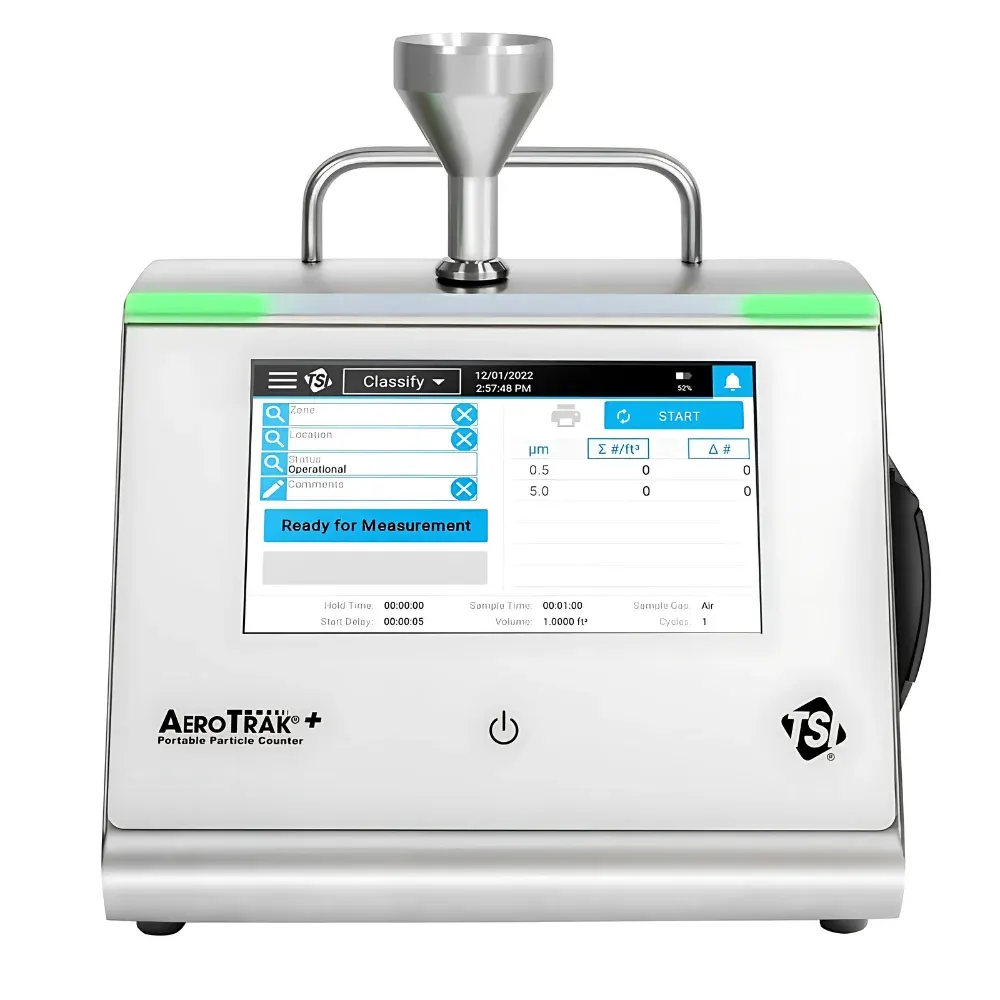
We uses TSI Aerotrak 100 to validate Recovery test. Feel free to contact us for validation services in Gujarat, India.

Our Validation Services

HEPA Filter Integrity Validation

Recovery test validation

Temperature and Humidity mapping

LUX and Noise Mapping

Compressed Air Validation

Equipment Validation

calibration.kesar@gmail.com
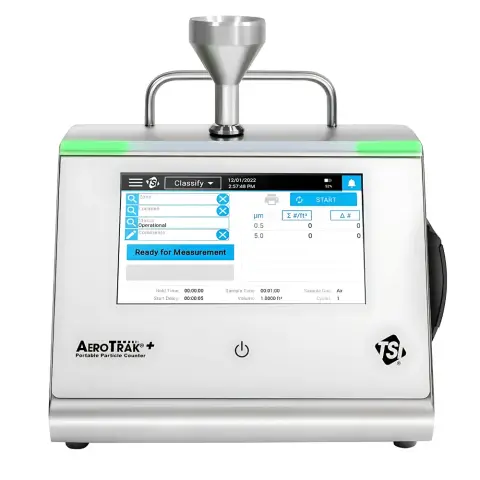
Recovery Test Validation — photo 1

What we test

  • 100:1 recovery time measurement
  • Cleanliness recovery rate
  • Aerosol challenge generation
  • Particle counts at critical points
  • Non-unidirectional airflow rooms
  • Grade B, C and D areas
  • Post-modification requalification

What you receive

  • Recovery time per room
  • Particle count data and decay graph
  • Acceptance criteria versus results
  • Instrument calibration certificates attached

WHY IT MATTERS

Why recovery test validation matters
for Gujarat's industries.

Documented, repeatable testing shows your controlled environments perform as designed.

01

Proof of clean-up

The test shows in measured minutes how fast each room clears contamination, rather than relying on air change rates calculated from design figures.

02

Reveals poor air mixing

A slow recovery often points to dead zones, poorly placed returns or insufficient supply air that a simple particle count at rest would not reveal.

03

Supports operating procedures

Knowing the recovery time helps QA set realistic clean-up periods after interventions, material transfers or shift changes before work restarts.

HOW WE WORK

How our Ahmedabad lab works with you.

Every engagement follows the same disciplined steps, so results are consistent and audit-ready.

  1. 01

    Scope your requirement

    Share your instrument list, rooms or systems and the standards you work to. We confirm parameters, ranges and acceptance criteria before anything is scheduled.

  2. 02

    Plan the work

    We agree dates, on-site or in-lab handling and the protocol to follow, so production and QA know exactly what will happen and when.

  3. 03

    Measure with traceable standards

    Qualified engineers carry out the work using calibrated reference instruments traceable to national standards, recording raw data as they go.

  4. 04

    Report and certify

    You receive clear certificates and reports — results, uncertainty or acceptance criteria, and traceability — ready for audits and regulatory inspections.

FREQUENTLY ASKED

Recovery test validation in Ahmedabad: your questions.

Can’t find what you need? Call +91 63579 03105 or email calibration@kesartesting.com.

What is the 100:1 recovery time?

ISO 14644-3 describes the recovery test in Annex B.4. The 100:1 recovery time is the time taken for the particle concentration to fall to one hundredth of its initial elevated level. It can be measured directly or calculated from the cleanliness recovery rate. The acceptance criterion is set by the site, usually from the room's design and GMP expectations.

How is the room contaminated for a recovery test?

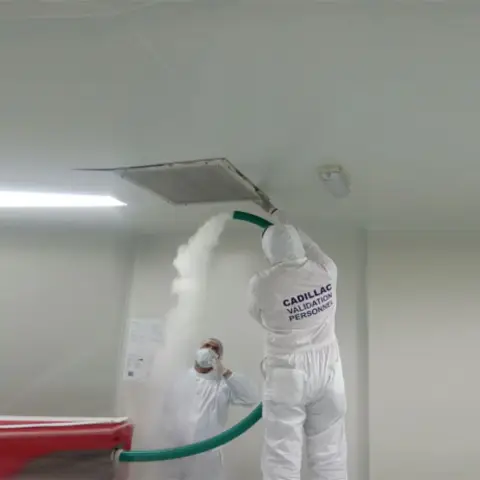
An aerosol generator raises the particle concentration in the room well above the class limit, so the decay can be measured clearly. The generator is then switched off and a particle counter records concentrations at regular intervals at a defined location until the room returns to its target level. The method is fixed in the approved protocol.

Is a recovery test needed for unidirectional airflow zones?

The recovery test is mainly applied to non-unidirectional (turbulent) airflow rooms, where clean-up depends on dilution and mixing. In unidirectional zones, particles are swept away by the airflow itself, so velocity, airflow visualisation and filter leak tests are usually more relevant. ISO 14644-3 notes that the test is not recommended for unidirectional airflow.

What can cause a room to fail the recovery test?

Common causes include low supply air volume, loaded or damaged filters, return grilles that are blocked or poorly positioned, and equipment that creates dead zones. Unbalanced dampers after maintenance can also reduce the effective air change rate. Comparing the result with airflow and pressure data usually narrows down the cause.

LET'S WORK TOGETHER

Your calibration partner
in Ahmedabad, Gujarat.

Talk to our team about calibration, validation and testing for your facility.

Start a conversation