Precision you can build on. NABL accredited laboratory
calibration@kesartesting.com+91 63579 03105

Compressed Air Testing & Validation in India

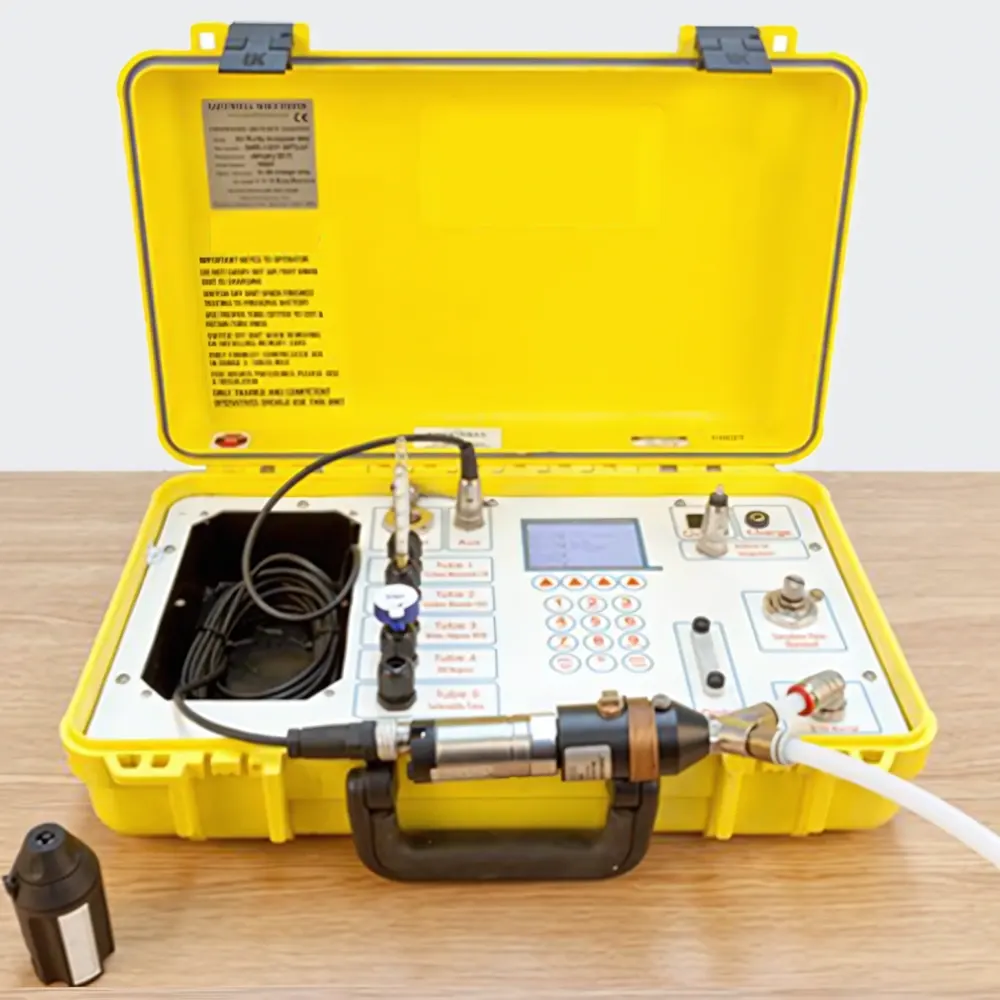
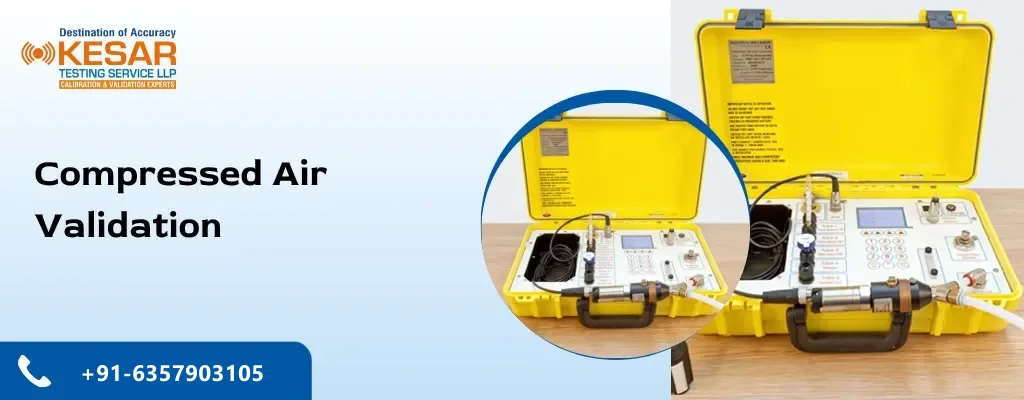
Compressed Air Validation is the process of verifying that compressed air and process gases meet established quality standards.

Compressed Air Validation — Kesar Testing Service LLP

THE SERVICE

Compressed air validation in Ahmedabad, with traceable instruments.

Compressed air validation tests the quality of air and process gases at the point where they meet your product, equipment or cleanroom. Particles, water and oil carried in the line can contaminate product directly, so purity is measured and classified rather than assumed from the compressor and dryer specification.

Compressed Air Validation is the process of verifying that compressed air and process gases meet established quality standards.

In pharmaceutical & laboratories & manufacturing unit , the testing and monitoring of compressed air and other process gases —such as nitrogen, oxygen, argon, and carbon dioxide —is essential when these gases come into direct or indirect contact with products, equipment, or cleanroom environments. These validation activities play a vital role in safeguarding product quality , safety , and regulatory compliance .

The most important parameters in specifying Compressed air quality are:

• Dew Point

• Oil Content

• Particulate matter

• Moisture Content

• Viable Count.

Kesar Testing Service LLP: Your trusted partner in compressed Air Validation

Kesar Testing Service LLP has a long history of providing calibration and validation services to the pharmaceutical, food, biotechnology, and healthcare industries. They have vast experience providing security, product quality, and operational efficiency, assisting businesses with solid and exact solutions.

Feel free to contact us for reliable, expert calibration and validation services.

Our Validation Services

HEPA Filter Integrity Validation

Recovery test validation

Temperature and Humidity mapping

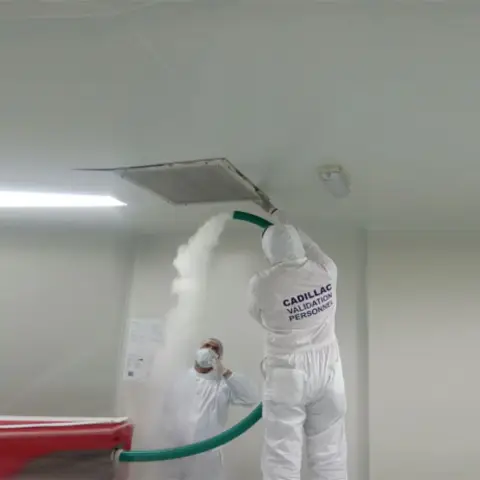
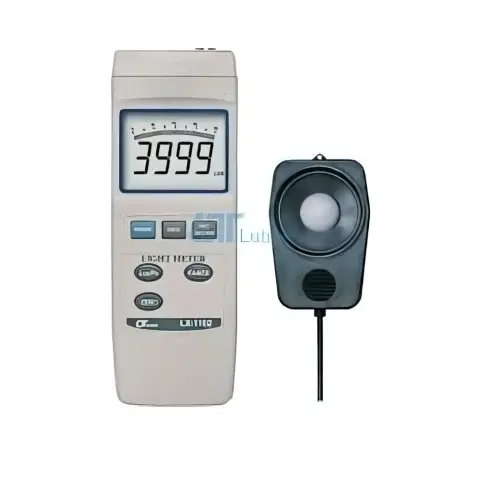
LUX and Noise Mapping

Equipment Validation

calibration.kesar@gmail.com
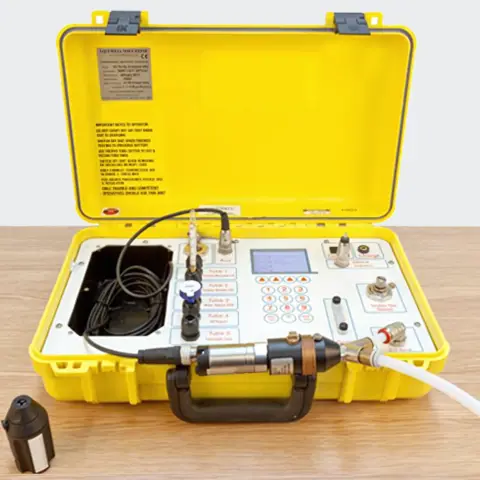
Compressed Air Validation — photo 1

What we test

  • Particle count at point of use
  • Pressure dew point (moisture)
  • Oil aerosol and vapour content
  • Microbial (viable) count
  • Nitrogen and process gas lines
  • Purity class against ISO 8573-1
  • Sampling point identification

What you receive

  • Test report per sampling point
  • Purity class assigned per parameter
  • Acceptance criteria versus results
  • Instrument calibration certificates attached

WHY IT MATTERS

Why compressed air validation matters
for Gujarat's industries.

Documented, repeatable testing shows your controlled environments perform as designed.

01

Product contact assured

Testing at the point of use shows what actually reaches the product or equipment, including contamination picked up in pipework after the dryer and filters.

02

Clear purity classification

Results are expressed as ISO 8573-1 classes for particles, water and oil, which makes them easy to compare with your specification and supplier data.

03

Targeted maintenance

A high dew point or oil reading points to a specific dryer, filter or compressor issue, so maintenance effort goes where it is actually needed.

HOW WE WORK

How our Ahmedabad lab works with you.

Every engagement follows the same disciplined steps, so results are consistent and audit-ready.

  1. 01

    Scope your requirement

    Share your instrument list, rooms or systems and the standards you work to. We confirm parameters, ranges and acceptance criteria before anything is scheduled.

  2. 02

    Plan the work

    We agree dates, on-site or in-lab handling and the protocol to follow, so production and QA know exactly what will happen and when.

  3. 03

    Measure with traceable standards

    Qualified engineers carry out the work using calibrated reference instruments traceable to national standards, recording raw data as they go.

  4. 04

    Report and certify

    You receive clear certificates and reports — results, uncertainty or acceptance criteria, and traceability — ready for audits and regulatory inspections.

FREQUENTLY ASKED

Compressed air validation in Ahmedabad: your questions.

Can’t find what you need? Call +91 63579 03105 or email calibration@kesartesting.com.

What does ISO 8573-1 specify for compressed air?

ISO 8573-1 defines purity classes for three main contaminants in compressed air: solid particles, water and oil. A specification such as Class 2:4:1 states the required class for each, in that order. The standard sets the classes, while other parts of the ISO 8573 series describe how each contaminant is measured.

Why is pressure dew point measured instead of humidity?

Pressure dew point is the temperature at which water vapour in the compressed air would condense at line pressure. It shows directly whether liquid water could form in pipework or at the point of use, which encourages corrosion and microbial growth. It is the moisture parameter used in the ISO 8573-1 water classes.

Should nitrogen and other process gases be tested too?

Yes, where they come into direct or indirect contact with product, such as nitrogen used for blanketing, purging or filling. The same contaminants of concern, including particles, moisture, oil and micro-organisms, are assessed at the point of use. The acceptance criteria should be defined in the site's own specification for each gas.

How often should compressed air quality be tested?

There is no single fixed interval. Sites usually test after installation or major change and then routinely at a frequency set by their risk assessment, often more frequently at product-contact points. Trends in routine results are used to adjust the interval, and any repair to dryers, filters or distribution pipework normally triggers a repeat test.

LET'S WORK TOGETHER

Your calibration partner
in Ahmedabad, Gujarat.

Talk to our team about calibration, validation and testing for your facility.

Start a conversation