
Precision you can build on. NABL accredited laboratory
calibration@kesartesting.com+91 63579 03105

Weighing Balance Calibration Services in India

Balance calibration is the procedure of evaluating and calibrating weighing instruments to achieve precise and repeatable measurements.

Balance — Kesar Testing Service LLP

THE SERVICE

Balance calibration in Ahmedabad, by an NABL accredited lab.

Balance calibration checks an analytical, precision or industrial balance against calibrated reference weights for repeatability, eccentricity and error across its weighing range. In pharmaceutical and food laboratories, balance results underpin assays, formulation and batch records, so a reliable balance is one of the most important instruments you hold.

Balance calibration is the procedure of evaluating and calibrating weighing instruments to achieve precise and repeatable measurements. It involves examining the balance measurements to verified reference weights and making the appropriate modifications. This is critical for quality assurance and compliance in industries such as pharmaceuticals, food, and manufacturing.

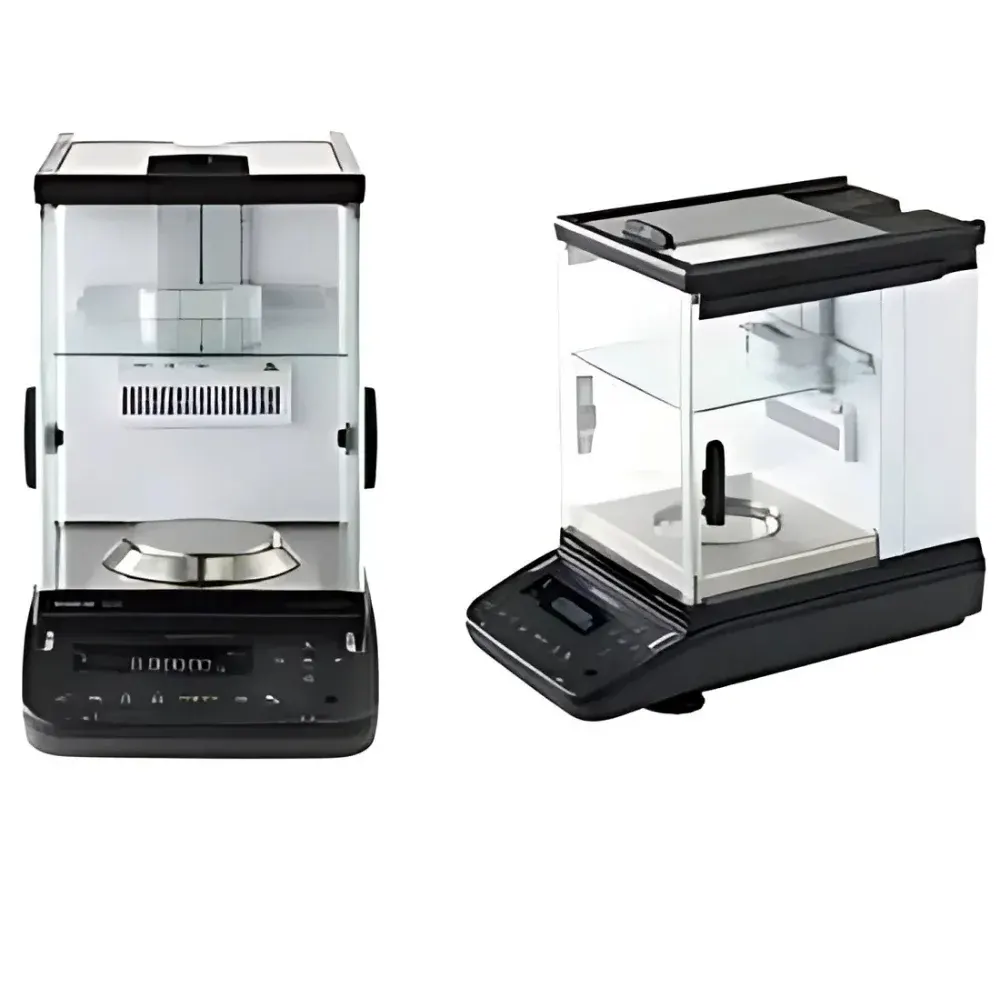
What is Shimadzu AP225 and how does the Kesar Testing Service LLP help in balance calibration?

Kesar Testing Service LLP does precision balance calibration with high-accuracy devices like the Shimadzu AP225 Analytical Balance. This advanced balance has high sensitivity and reproducibility, making it perfect for calibrating a variety of weighing equipment such as analytical balances, laboratory scales, and microbalances.

Our calibration procedure ensures that all instruments comply with strict national and international standards such as ISO, NABL, and OIML, ensuring traceability and confidence in every measurement. Kesar Testing Service LLP provides trustworthy, verified calibration services to laboratories, pharmaceutical firms, and industrial facilities using our professional specialists and advanced technology.

Feel free to contact us for reliable, expert calibration and validation services.

Thermal Calibration

Mechanical Calibration

Electrotechnical Calibration

Acoustic Calibration

Optical(LUX/VV) Calibration

calibration.kesar@gmail.com

Photo Gallery
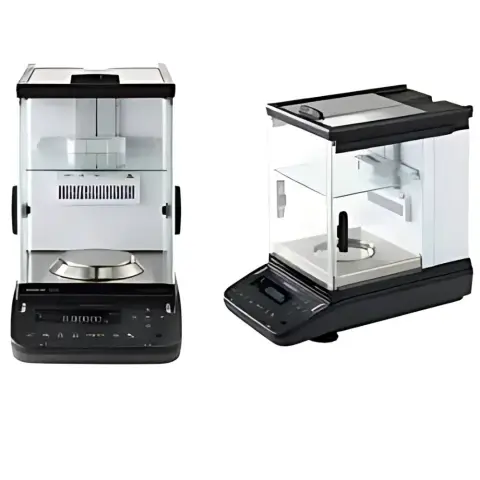
Balance — photo 1

What we calibrate

  • Analytical balances
  • Semi-micro and microbalances
  • Precision top-loading balances
  • Moisture balances
  • Bench scales
  • Platform and floor scales
  • Repeatability testing
  • Eccentricity (corner load) testing

What you receive

  • Certificate with error of indication at each test load and uncertainty
  • Repeatability and eccentricity results
  • Traceability statement to national mass standards
  • Calibration status label fixed to the balance

WHY IT MATTERS

Why balance calibration matters
for Gujarat's industries.

Accurate, traceable calibration protects product quality and keeps your records defensible.

01

Calibrated where it stands

Balances are calibrated on-site at their place of use, so levelling, draughts and bench conditions are reflected in the results you rely on.

02

Recognised calibration method

We work with reference to EURAMET cg-18 for non-automatic weighing instruments, with performance assessed against OIML R 76 where relevant.

03

Complete performance picture

Repeatability, eccentricity and error across the range give you the data needed to set your balance's minimum weight and routine check criteria.

HOW WE WORK

How our Ahmedabad lab works with you.

Every engagement follows the same disciplined steps, so results are consistent and audit-ready.

  1. 01

    Scope your requirement

    Share your instrument list, rooms or systems and the standards you work to. We confirm parameters, ranges and acceptance criteria before anything is scheduled.

  2. 02

    Plan the work

    We agree dates, on-site or in-lab handling and the protocol to follow, so production and QA know exactly what will happen and when.

  3. 03

    Measure with traceable standards

    Qualified engineers carry out the work using calibrated reference instruments traceable to national standards, recording raw data as they go.

  4. 04

    Report and certify

    You receive clear certificates and reports — results, uncertainty or acceptance criteria, and traceability — ready for audits and regulatory inspections.

FREQUENTLY ASKED

Balance calibration in Ahmedabad: your questions.

Can’t find what you need? Call +91 63579 03105 or email calibration@kesartesting.com.

How often should laboratory balances be calibrated?

Calibration frequency depends on usage, the criticality of weighing, the manufacturer's guidance and your SOPs or regulatory requirements. Annual calibration by an accredited laboratory is common, supported by daily or weekly checks with calibrated check weights carried out by your own staff between calibrations.

Why are balances calibrated on-site rather than in a laboratory?

A balance's performance depends on where it is installed: the bench, levelling, air currents and temperature all affect results. Calibrating it in its place of use gives results that reflect real working conditions. Moving a balance after calibration can change its performance, so on-site calibration is the norm.

What tests are included in a balance calibration?

A typical calibration includes repeatability using repeated loads, eccentricity by placing a load at different positions on the pan, and error of indication at several loads across the range. The certificate reports results with measurement uncertainty, following the approach in EURAMET cg-18.

Does balance calibration help with determining minimum weight?

Yes. The repeatability and uncertainty data from calibration are the inputs used to assess the smallest net quantity a balance can weigh within your required accuracy. Our certificate gives you the data; the acceptance limits should come from your SOPs and applicable pharmacopoeial requirements.

LET'S WORK TOGETHER

Your calibration partner
in Ahmedabad, Gujarat.

Talk to our team about calibration, validation and testing for your facility.

Start a conversation